
Unmanned Aerial Vehicles (UAVs) are the new frontier
Tube Milling
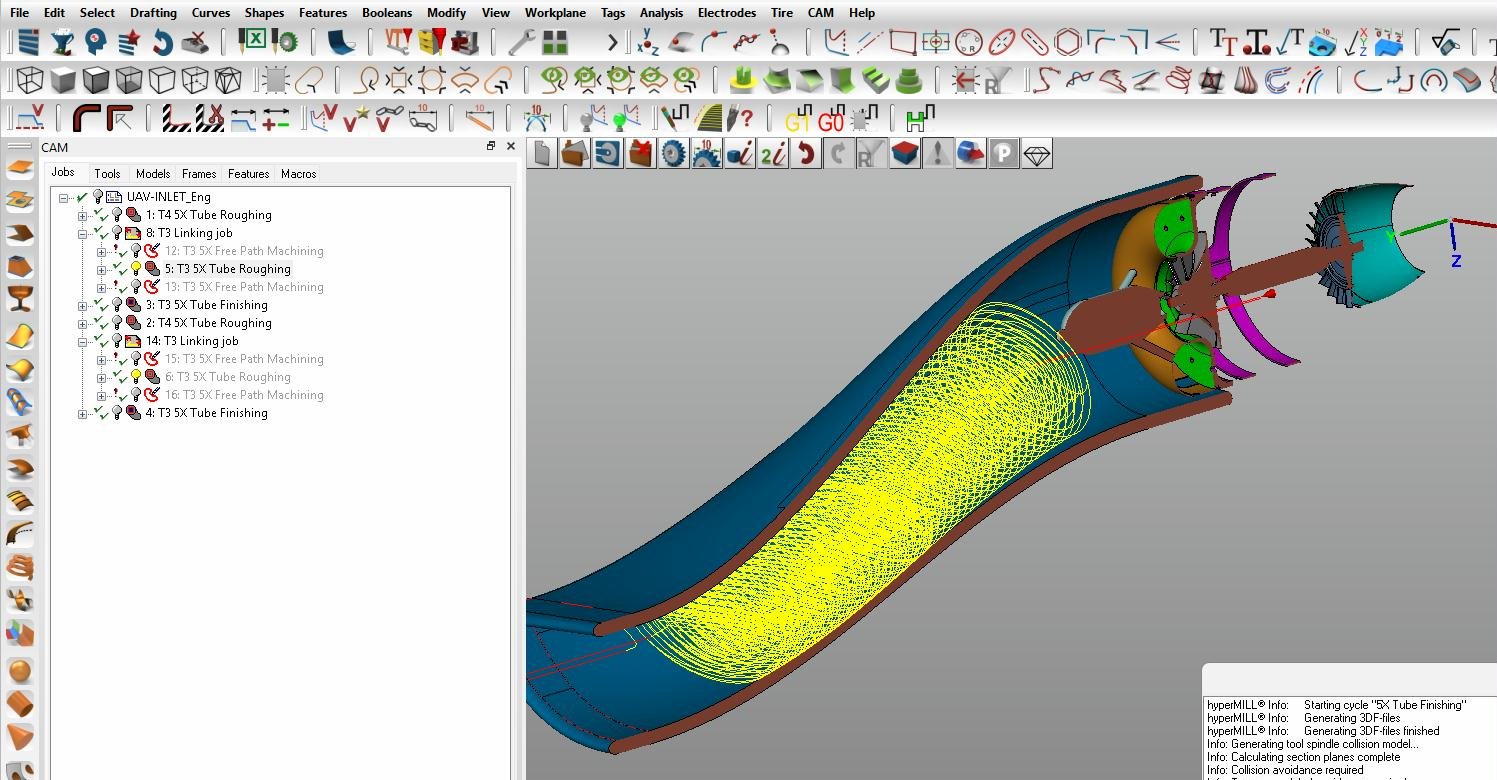
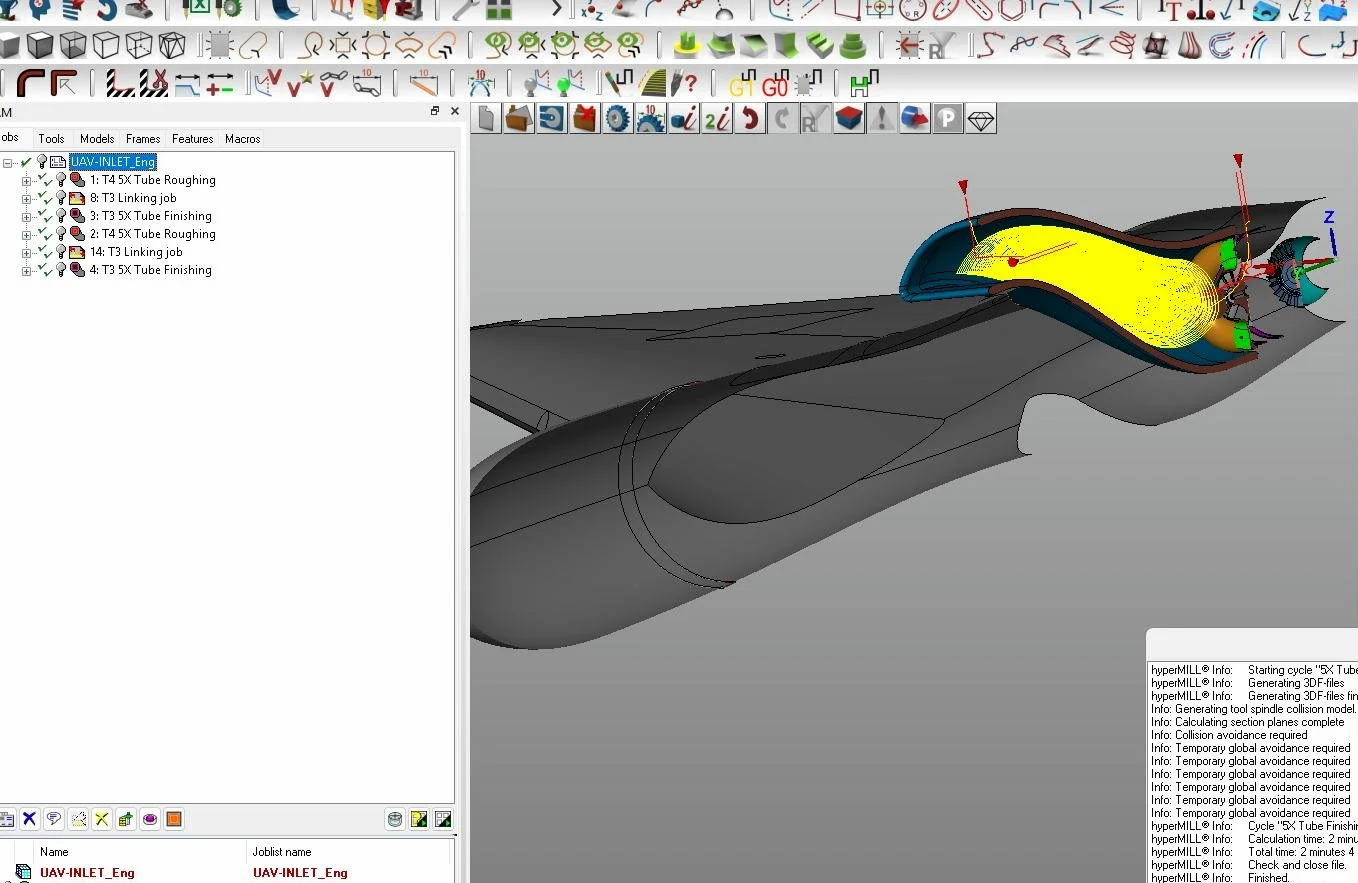
hyperMILL leads the competition in machining complex, hard-to-reach features by combining advanced toolpath strategies, intelligent automation, and precise collision avoidance. Its capabilities are particularly valuable for manufacturers working with tubular parts, assemblies, and components with interior bores or curved geometries.
Optimized toolpaths for internal tube surfaces, reducing cycle time while maintaining surface quality.
Collision-free tool motion and dynamic tool orientation for safe, efficient access to confined spaces.
Support for multi-axis strategies that enable continuous, smooth machining.
Rest machining and fine finishing cycles that preserve form accuracy and achieve required surface finishes in tight areas.
For manufacturers producing automotive intake / exhaust, aerospace ducting, medical tubing, or industrial piping, hyperMILL’s Tube Milling delivers higher productivity, improved part quality, and reduced rework—making it a strategic asset in any shop tackling tubular and hard-to-reach geometries.
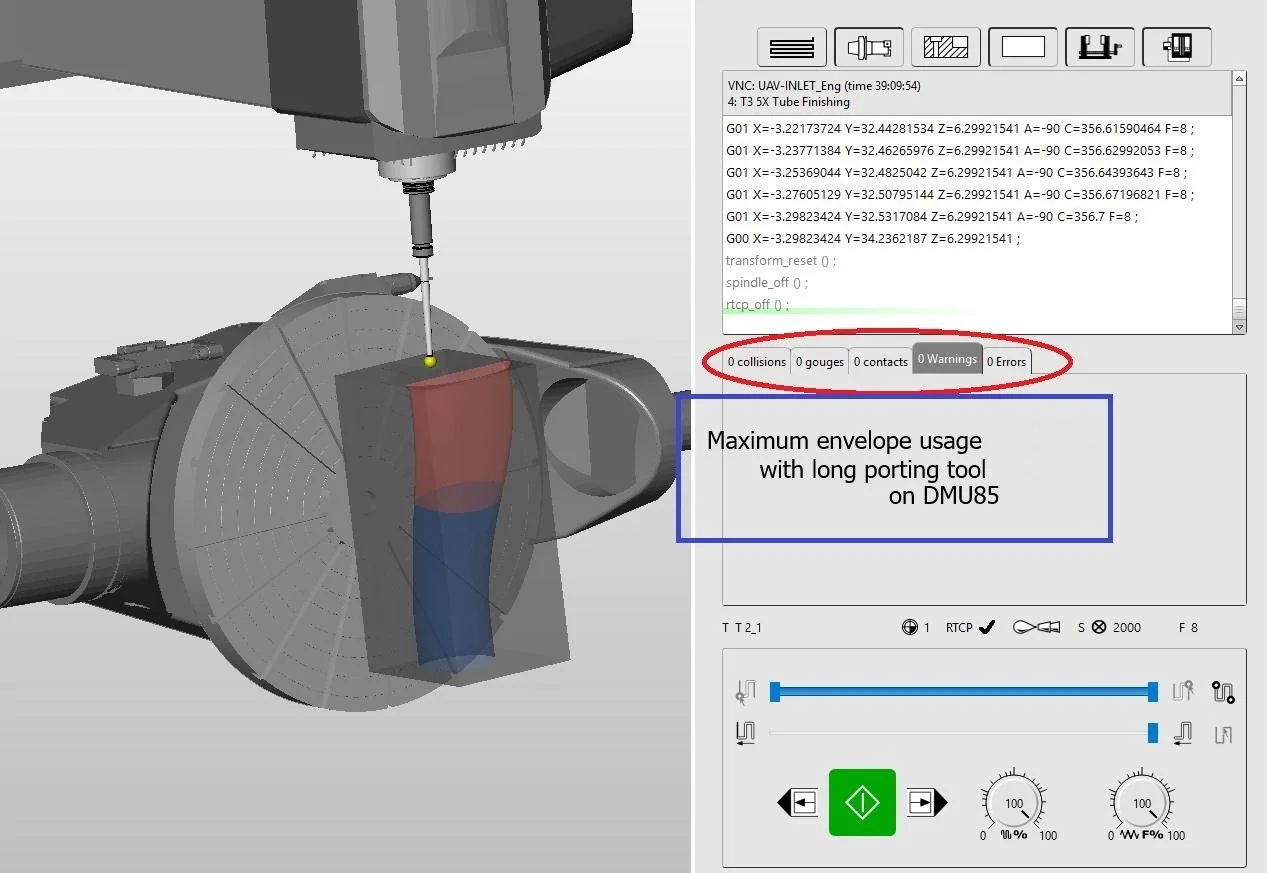
Full‑envelope verification: The DMU‑85’s large work envelope combined with a long‑reach lollipop cutter allows access to deep cavities and extended contours. Virtual machine simulation lets you prove collisions, reachability, and tool orientation across the entire envelope before any metal is touched.
Accurate kinematics: Virtual machine technology models use the actual kinematic behavior — rotary axes, table travel limits, head clearances and work holding — so the simulated toolpath mirrors real‑world motion.
Simulating the full envelope lets you evaluate feeds, speeds, stepover, and engagement for different regions of the part, so you can select cutting parameters and tool overhangs that minimize chatter while meeting surface finish targets.
NC code validation and machine‑specific postprocessing: Run the exact NC programs destined for the DMU‑85 through the virtual machine. Validate axis limits, rotary wrapping, and the machine‑specific postprocessor output so the code that runs on the shop floor is already proven safe and optimal.